The Wild Appearance of the Domestic Ocicat Breed
The Ocicat represents a pinnacle of intentional feline bio-engineering and phenotypic selection within the modern cat fancy. As a breed entirely derived from domestic ancestry (Felis catus), it serves as a fascinating biological paradox: a creature that visually mirrors the "primitive" aesthetic of the wild Ocelot (Leopardus pardalis) while possessing a temperament meticulously refined for domestic cohabitation. This compendium explores the Ocicat not merely as a pet, but as a masterpiece of genetic arrangement, tracing its origins from a serendipitous cross-breeding event in Michigan to its current status as a globally recognized standard of athletic excellence and social intelligence. This analysis is designed for professionals, veterinarians, and dedicated enthusiasts seeking an exhaustive understanding of the breed's historical, genetic, and ethological framework.
Historical and Political Analysis: From Serendipity to Global Recognition
The history of the Ocicat is a narrative of accidental discovery transformed into a rigorous breeding discipline. Unlike many breeds that result from natural mutations in isolated populations, the Ocicat is a "man-made" breed, though it relies entirely on the natural selection of existing domestic traits. The genesis occurred in 1964 in Berkley, Michigan, under the stewardship of breeder Virginia Daly. Her original objective was unrelated to creating a spotted cat; she was attempting to produce an "Abypoint" Siamese—a Siamese cat with the ticked coat pattern of an Abyssinian.
The "Tonga" Event and Genetic Serendipity
The initial experimental protocol involved crossing a Ruddy Abyssinian male with a Seal Point Siamese female. The resulting first generation (F1) appeared phenotypically Abyssinian but carried the recessive Siamese gene. When a female from this F1 generation was bred back to a Chocolate Point Siamese, the expected results included Abypoints. However, the litter contained a male kitten of striking appearance: ivory-colored with distinct golden spots. This kitten, named Tonga, was the first Ocicat. While Daly’s daughter noted the resemblance to the wild Ocelot, Tonga was initially neutered and sold as a pet. It was only after noted geneticist Dr. Clyde Keeler expressed interest in seeing a domestic cat mimic the coat of disappearing wild species that Daly repeated the breeding to establish a foundation line.
Political Recognition and the American Shorthair Integration
The path to formal recognition was a complex political maneuver within feline registries like the Cat Fanciers' Association (CFA). In the late 1960s and 1970s, there was significant resistance to "hybrid-look" cats. To distinguish the Ocicat from the more slender Oriental Spotted Tabby and to enhance its physical stature, the American Shorthair was introduced into the gene pool. This was a critical political and biological move: it provided the breed with its signature muscularity, increased bone density, and introduced the silver inhibitor gene (I), which allowed for the development of the striking silver color varieties. The breed was eventually granted Championship status by the CFA in 1987, followed by recognition from The International Cat Association (TICA) and the Fédération Internationale Féline (FIFe) in Europe, where it remains a prestigious and rare find compared to its established popularity in North America.
| Key Date | Historical Milestone | Strategic Impact |
|---|---|---|
| 1964 | Birth of "Tonga" in Michigan | Identification of the "spotted" phenotype in domestic crosses. |
| 1966 | CFA Registration | Official entry into the registry as an experimental breed. |
| 1987 | CFA Championship Status | Validation of the breed as a stable, distinct genetic entity. |
| 1992 | FIFe Recognition | Expansion into the European market and international standards. |
Technical and Scientific Analysis: The Genetics of Pattern and Morphology
The Ocicat’s striking appearance is a result of complex genetic interactions involving the Agouti locus and the Tabby locus. Scientifically, it is essential to understand that the Ocicat’s spots are not "true" spots in the sense of a wild cat's rosettes, but are a specific manifestation of the Spotted Tabby pattern, refined through generations of selective breeding to eliminate the "barring" typically seen in mackerel or classic tabbies.
The Genetic Architecture of the Coat
The fundamental gene involved is the dominant Agouti gene (A), which allows for the expression of the underlying tabby pattern. The specific arrangement of spots is controlled by modifiers of the Ticked (Ta) and Spotted (Sp) genes. In high-quality Ocicats, the "ticking" inherited from the Abyssinian ancestor ensures that each hair within a spot contains multiple bands of color, providing a depth and "shimmer" that solid-colored spots lack. The introduction of the Inhibitor gene (I) from the American Shorthair allows for the "Silver" varieties, where the yellow/red pigment (pheomelanin) is suppressed at the base of the hair, leaving a stark white or silver background that makes the eumelanin-based spots (black, chocolate, cinnamon) pop with high contrast.
Anatomical Biomechanics
The Ocicat is classified morphologically as "semi-foreign," leaning toward a "substantial" build. Its musculoskeletal system is optimized for power and agility. The bone structure is dense, which explains why an Ocicat often feels significantly heavier than it looks. The musculature is hard and lean, with a deep chest and a straight back that slopes slightly toward the rear, indicating a high capacity for explosive jumping. The head is a modified wedge, with a "muzzle break" that is neither as extreme as the Siamese nor as blunt as the American Shorthair, allowing for a strong jaw and a wide dental arch.
Character and Ethology: The "Dog-Cat" Phenomenon
Social Intelligence and Communication
The Ocicat possesses a vast vocal repertoire, inherited from its Siamese ancestors, but often modulated into softer, more inquisitive tones. It utilizes "shadowing" behavior—following humans from room to room—as a means of monitoring social dynamics. Their intelligence is manifested in their ability to solve environmental puzzles, such as opening lever-style doors or retrieving specific objects. This cognitive demand means that the Ocicat is susceptible to "under-stimulation stress," which can manifest as hyperactive or destructive behavior if their environment does not provide sufficient mental "foraging" opportunities.
Interspecies Compatibility and Hunting Instincts
Because of their confident nature, Ocicats have a very low threshold for "neophobia" (fear of the new). They integrate exceptionally well into multi-pet households, often assuming a "mediator" or "alpha" role with dogs. However, their predatory drive (prey drive) remains highly tuned. Their visual tracking of fast-moving objects is superior, and they retain a primitive "stalk-and-pounce" instinct that makes them dangerous to small household pets like hamsters, birds, or ornamental fish. For the professional owner, this requires strict environmental management to prevent "predatory accidents."
Appearance: The Standard of Perfection
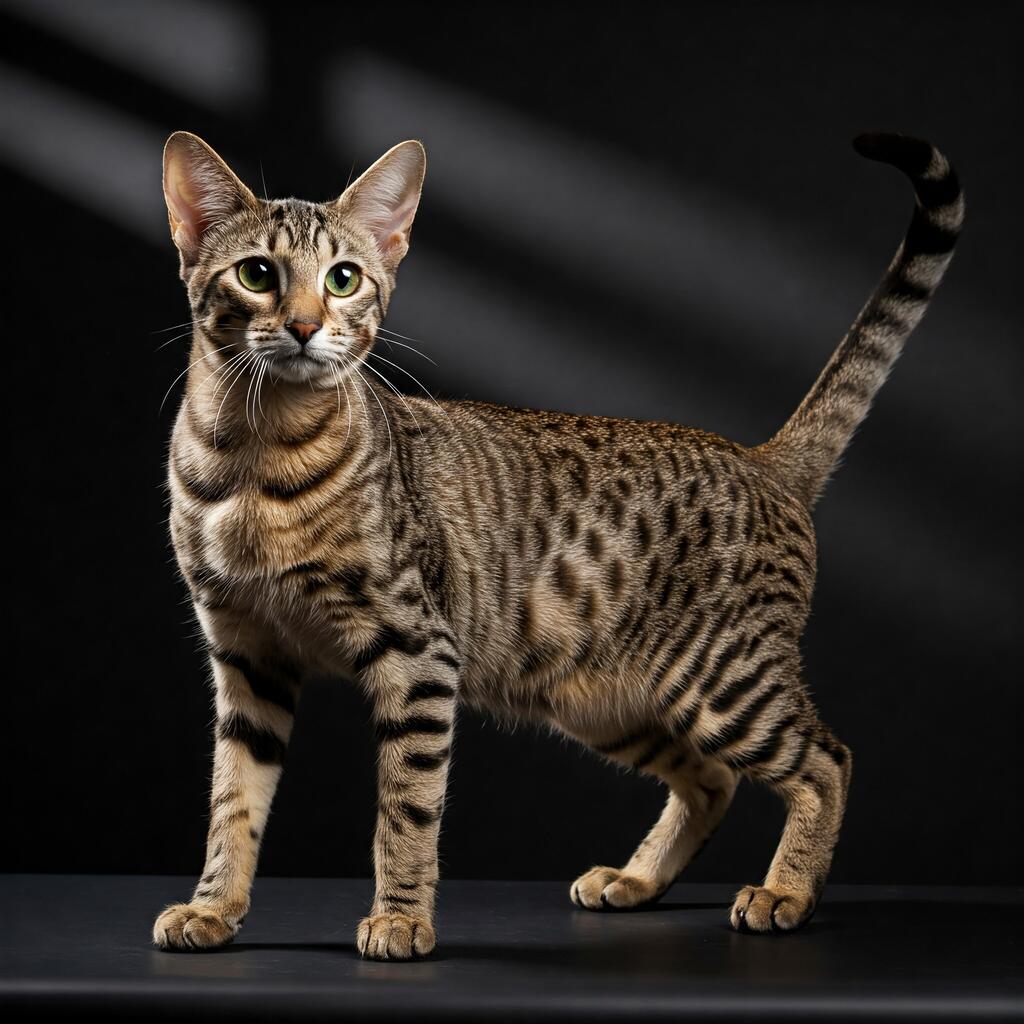
Cranial Morphology and Eyes
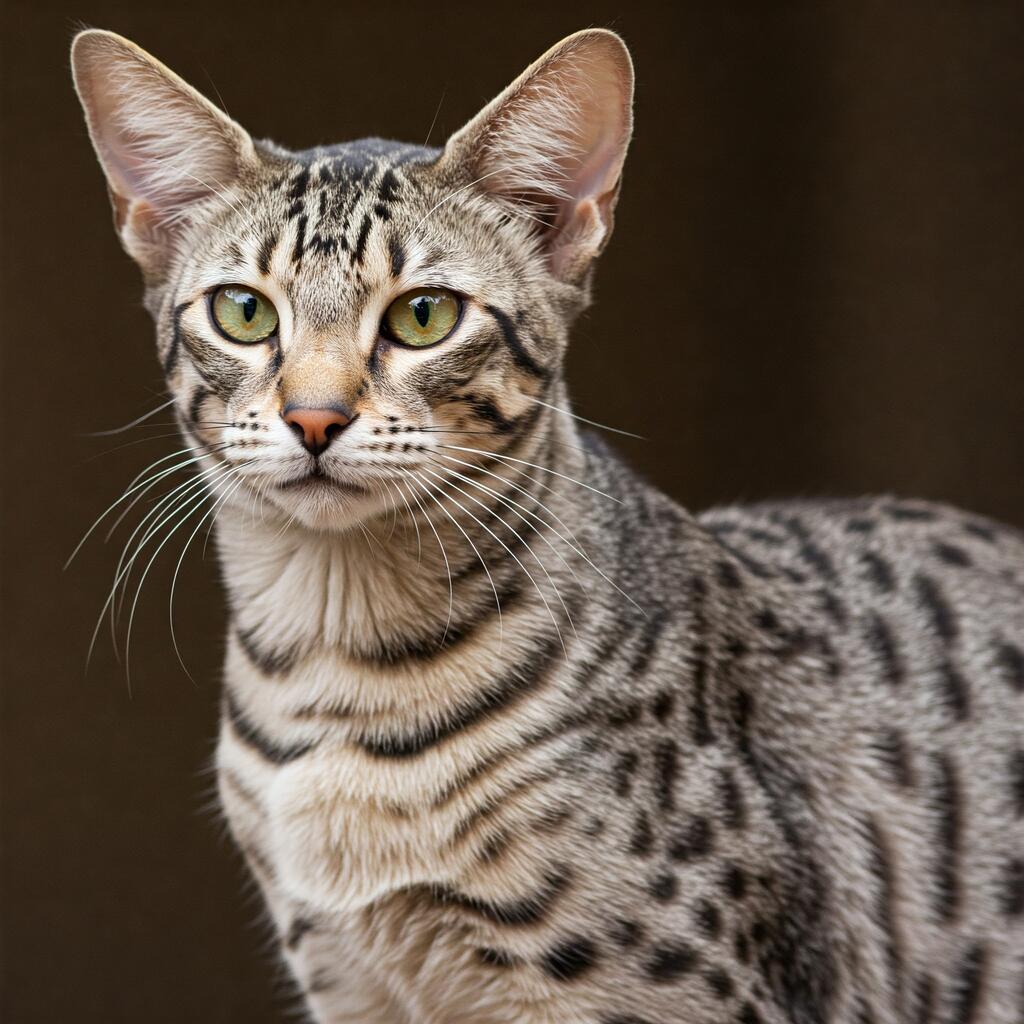
The head must be a modified wedge with a slight curve from the muzzle to the cheek. A prominent feature is the "M" marking on the forehead, a hallmark of the tabby pattern, which should be sharp and clear. The ears are moderately large and set at a 45-degree angle, giving the cat an "alert" or "on the hunt" look. The eyes are large, almond-shaped, and set widely apart. While they can be almost any color, deep gold, green, or amber are preferred for their "jungle" look. Blue eyes are strictly prohibited by the standard, as they are a sign of unrefined Siamese influence (pointing to the cs gene) and would break the illusion of the wild ocelot phenotype.
The Coat: A Taxonomy of Spots
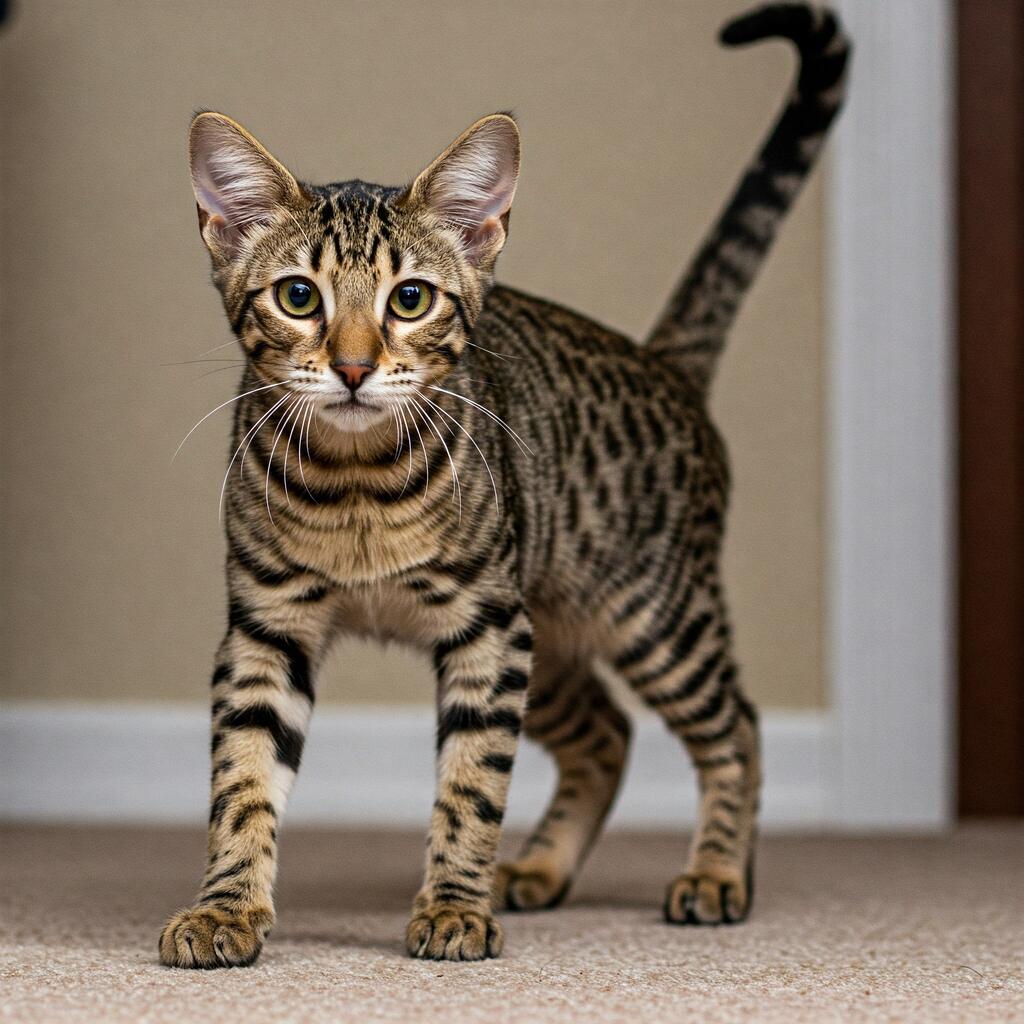
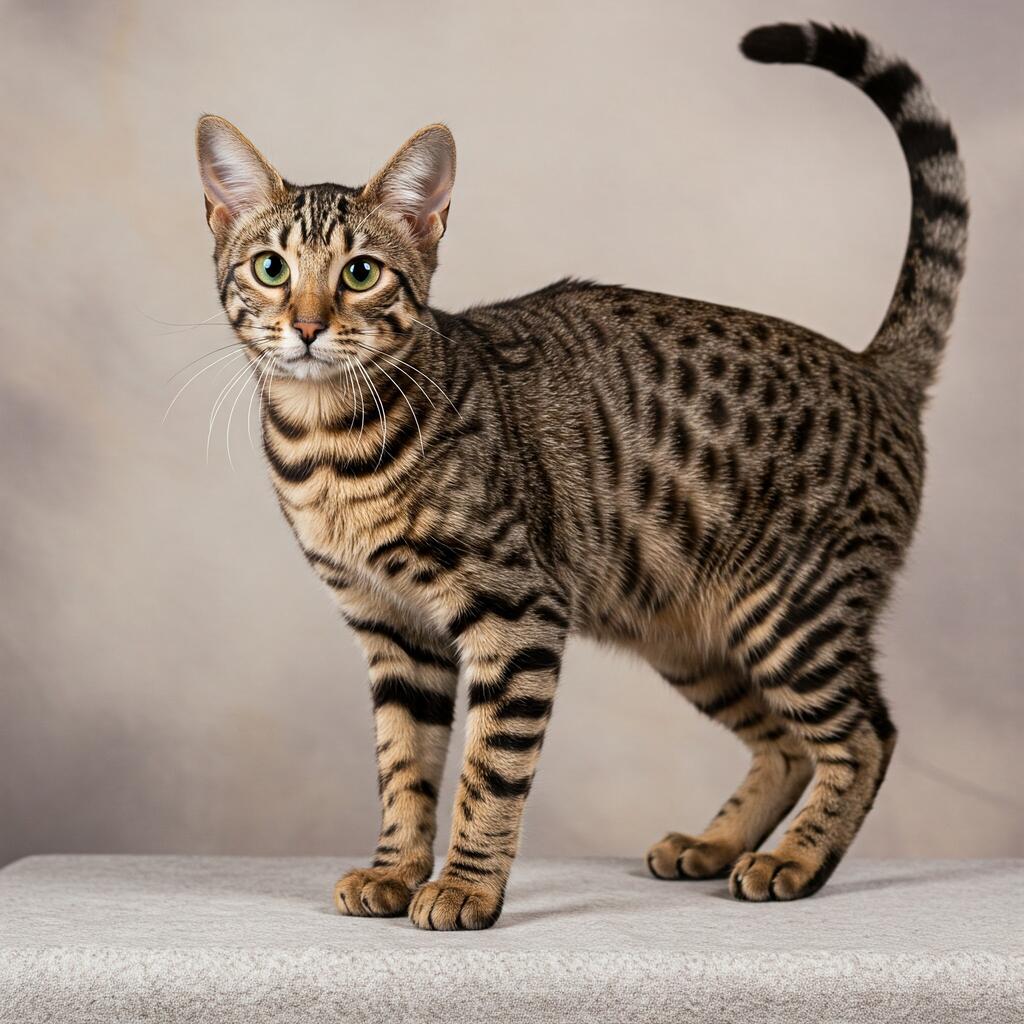
The Ocicat’s coat is its most defining feature. It is short, tight, and possesses a satin-like sheen. The spots themselves must be large and well-defined, shaped like "thumbprints." They are arranged in a specific geometric pattern:
- Dorsal Stripes: A row of spots should follow the spine, ending in a dark tail tip.
- Lateral Spotting: Spots should be scattered across the ribs and flanks in a "broken" pattern that follows the muscle lines.
- Ventral Marking: The "vest" or belly should also be spotted, a sign of high-quality genetic refinement.
- Legs and Tail: Should show "broken bracelets" and "broken rings," respectively.
The color palette is extensive, recognizing twelve official shades, including Tawny (the classic ocelot look), Chocolate, Cinnamon, Blue, Lavender, and Fawn, along with their corresponding Silver versions.
Health and Clinical Management
Genetic Screening and Preventative Medicine
- Hypertrophic Cardiomyopathy (HCM): Although not as prevalent as in the Maine Coon, HCM has been documented. Annual echocardiograms for breeding stock are considered best practice.
- Pyruvate Kinase Deficiency (PK Def): An inherited hemolytic anemia found in the Abyssinian line. Responsible breeders now use DNA testing to ensure their cats are "Clear" or "Non-carriers," effectively eliminating this risk from modern lines.
- Progressive Retinal Atrophy (PRA): A degenerative eye condition. DNA markers are available to screen for the rdAc mutation, preventing blindness in future generations.
- Renal Amyloidosis: A rare but serious condition involving protein deposits in the kidneys, occasionally seen in Abyssinian derivatives. Professional monitoring of renal values is advised as the cat ages.
Metabolism and Nutrition
The Ocicat has a high metabolic rate, reflecting its active lifestyle. They require a diet rich in high-quality animal proteins to maintain their dense muscle mass. Unlike many domestic cats, Ocicats rarely struggle with obesity if provided with enough space to exercise. Their lack of undercoat makes them highly efficient at dissipating heat but extremely vulnerable to hypothermia in cold environments. Owners must ensure ambient temperatures remain above 20°C (68°F) or provide heated resting areas.
Professional Management Guide: Step-by-Step Excellence
To maintain an Ocicat at its peak physical and psychological state, a professional management protocol is required. This goes beyond basic cat ownership and enters the realm of "feline husbandry."
Step 1: Environmental "Catification"
- Vertical Expansion: Install floor-to-ceiling climbing poles and wall-mounted shelving. The Ocicat is an "arboreal" cat that derives security from height.
- Safe Outdoor Access: Given their activity levels, a "Catio" or a secured garden is the gold standard. This allows for safe exploration and the "sensory hunting" of insects and birds without risk of escape.
- Puzzle Feeders: Move away from bowl-feeding. Use interactive toys that require the cat to work for its kibble, mimicking the effort of a wild feline.
Step 2: Professional Grooming for the "Show Look"
The Ocicat’s coat is low-maintenance but requires specific techniques to achieve the "satin" finish required for exhibitions:
- Weekly Brushing: Use a soft-bristled brush or a rubber curry comb to remove dead hair and distribute skin oils.
- The Chamois Polish: For a professional finish, wipe the coat with a damp chamois leather cloth. This removes dust and flatters the coat, making the spots glisten.
- Claw Maintenance: Due to their power, Ocicats can be rough on furniture. Weekly trimming and the provision of heavy-duty sisal scratching posts are mandatory.
Sustainability, Ethics, and Regulatory Framework
Ethical breeding of the Ocicat involves maintaining a low "Inbreeding Coefficient" (COI). Because the breed is relatively rare in some regions, there is a risk of genetic bottlenecks. Professional breeders must engage in international "outcrossing" (trading lines across borders) to maintain vitality. Furthermore, the Ocicat is a "purely domestic" breed, meaning it is not subject to the CITES (Convention on International Trade in Endangered Species) regulations that affect hybrids like the Savannah or early-generation Bengals. This makes the Ocicat a more sustainable and legally "safe" choice for urban environments where hybrid bans may be in place.
Social Responsibility of the Breeder
An ethical Ocicat breeder does not release kittens before 14-16 weeks. This extended period is crucial for the complex social learning required by this intelligent breed. Early separation can lead to "oral fixation" (wool sucking) or social aggression. Responsibility also involves mandatory neutering/spaying for non-show quality cats to prevent the dilution of the breed's specific traits in the general population.
Troubleshooting: Resolving Complex Issues
Even with a robust breed like the Ocicat, challenges can arise, particularly regarding their high-octane temperament.
Problem: Nocturnal Hyperactivity and Vocalization
Analysis: Usually a sign of insufficient daytime stimulation or "social boredom." Solution: Implement a "Play-Eat-Sleep" cycle. Engage the cat in a 20-minute intense hunting game (using a wand toy) immediately before the final evening meal. The protein intake combined with the physical exhaustion triggers the natural feline sleep cycle.
Problem: Territorial Marking in Multi-Cat Homes
Analysis: Despite their sociability, Ocicats are very territorial about "vertical space" and "resource access." Solution: Increase the number of litter boxes (N+1 rule) and ensure there are multiple "escape routes" from every room so the cat never feels cornered by a housemate. The use of synthetic feline facial pheromones can also stabilize the territorial environment.
FAQ: Frequently Asked Questions
- Are Ocicats hypoallergenic? No. While they produce less dander due to their short coat, they still produce the Fel d 1 protein in their saliva. They are "allergy-friendly" but not hypoallergenic.
- Do they really act like dogs? Yes, in the sense that they can be trained to fetch, walk on a leash, and respond to their names. However, they remain cats with a feline's sense of independence and spatial requirements.
- Can they be left alone? Not for long. An Ocicat alone for 10 hours a day will likely become depressed or destructive. They are "pack" animals and need a companion, either human or another active cat.
- How long do they live? With proper veterinary care, 15 to 18 years is a standard life expectancy, with some reaching 20.
"The Ocicat is not just a pet; it is a commitment to a higher level of feline-human partnership. To own one is to invite a slice of the jungle into your living room, without the danger, but with all the majesty."
Important: The information provided is for informational purposes and deeper insight only. Please read our Disclaimer (Section 17).