
Easy To Follow Chiles en Nogada Recipe Step By Step

Chiles en Nogada is not merely a recipe; it is a profound cultural monument, a sensory narrative of Mexican identity, and arguably the most sophisticated dish in the nation's culinary repertoire. Often referred to as the "National Dish of Mexico," it represents the literal and metaphorical birth of a nation. This dish is a complex Baroque construction, a term used in art history that, in the context of Mexican cuisine, describes the intricate fusion of indigenous Mesoamerican ingredients with European colonial influences brought by the Spanish conquest. This encyclopedic guide is designed to provide home cooks, professional chefs, and culinary historians with every nuance required to master this dish, covering its history, science, botany, and technical execution.
I. The Historical and Political Genesis of a Legend
To understand Chiles en Nogada, one must understand the year 1821. While the struggle for independence from Spanish rule began in 1810, it was the signing of the Treaty of Córdoba in 1821 that formalized Mexico's sovereignty. The legend of this dish is centered in the city of Puebla de los Ángeles, a strategic and cultural hub between the port of Veracruz and Mexico City.
The Augustinian Nuns of Santa Monica
History tells us that the Augustinian nuns of the Convent of Santa Monica were tasked with preparing a celebratory feast for Agustín de Iturbide, the commander of the Army of the Three Guarantees (Ejército Trigarante). Iturbide was traveling from Veracruz to Mexico City and stopped in Puebla to celebrate his saint's day, San Agustín, on August 28th. The nuns, famous for their confectionery skills and sophisticated palates, sought to create a dish that utilized the seasonal bounty of the region while paying homage to the new national identity.
The Symbology of the Three Guarantees
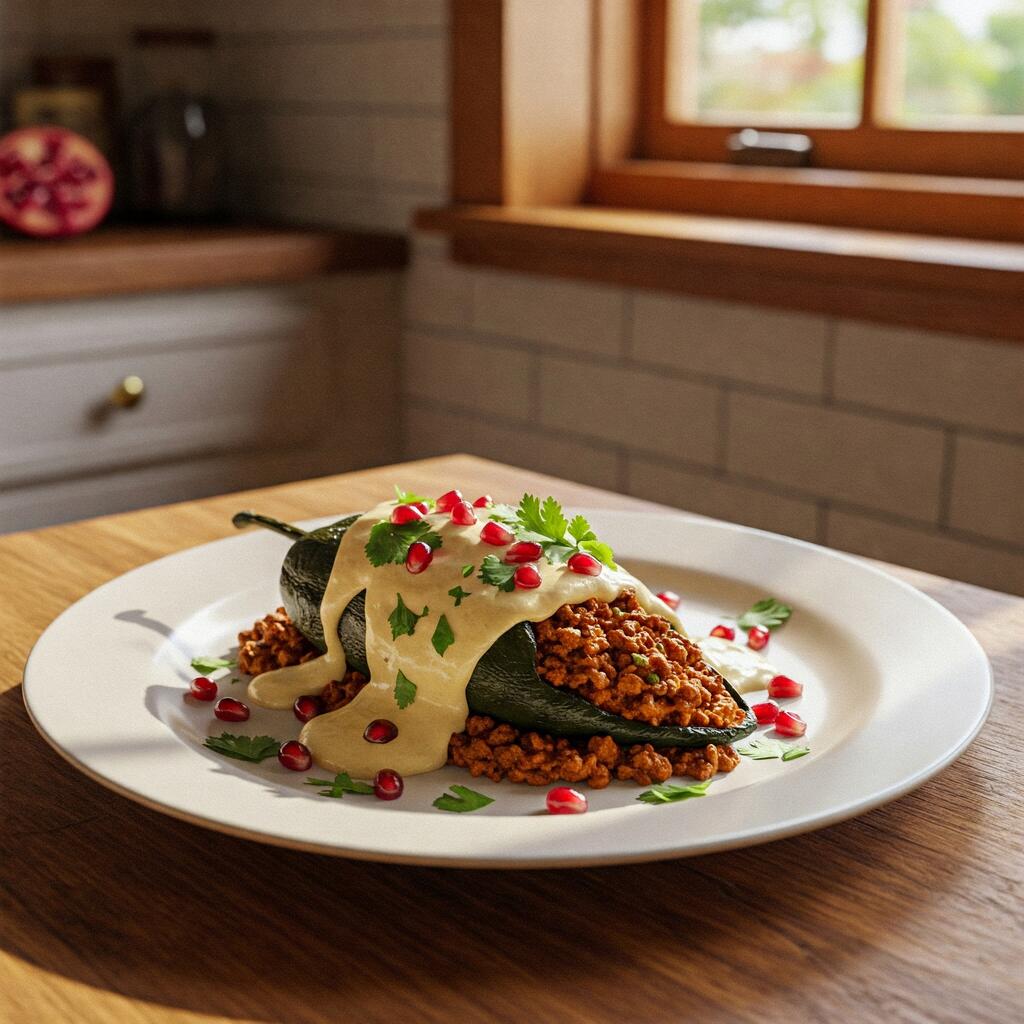
The visual presentation of Chiles en Nogada was a deliberate political statement. Each color on the plate corresponded to a guarantee of the new government, mirroring the colors of the first Mexican flag:
- Green: Represented by the charred Poblano pepper, symbolizing Independence and the hope of the Mexican people.
- White: Represented by the creamy walnut sauce (Nogada), symbolizing the Purity of Religion (Roman Catholicism), which was a unifying force at the time.
- Red: Represented by the bright pomegranate seeds, symbolizing the Union between Europeans and Americans, and the blood shed by the national heroes.
Beyond this legend, culinary historians point out that the dish evolved from earlier 18th-century recipes for "Chiles in Walnut Sauce," which were originally served as desserts or side dishes in aristocratic homes. The 1821 event transformed it into the savory-sweet main course we revere today, solidifying its place in the national consciousness.
II. Botanical and Regional Analysis: The Terroir of Puebla
The secret to an authentic Chiles en Nogada lies in the specificity of its ingredients. In the state of Puebla, particularly in regions like Calpan and San Nicolás de los Ranchos, the ingredients are harvested in a precise window between late July and mid-September. This seasonality is driven by the volcanic soil of the Popocatépetl and Iztaccíhuatl slopes, which imparts a unique minerality to the produce.
1. The Poblano Pepper (Capsicum annuum)
The Chile Poblano is the vessel. For this dish, the peppers must be large, heart-shaped, and possess a deep, dark green hue. Unlike the bell pepper, the Poblano has a mild heat (1,000 to 2,000 Scoville Heat Units). Its walls are thick and rich in essential oils. When roasted, these oils undergo a chemical transformation that provides the smoky "umami" base essential for the dish's flavor profile. The specific cultivar grown in Puebla is prized for its balance of earthy sweetness and subtle spice.
2. The "Nuez de Castilla" (Castilian Walnut)
The defining element is the Nuez de Castilla (Juglans regia). These are not common dried walnuts. They are fresh walnuts, harvested when the hull is still green. The inner meat is milky, white, and extremely fragile. The most laborious part of the recipe is peeling the thin brown skin (pellicle) off every single walnut kernel. This skin contains high levels of tannins; if left on, the sauce will be bitter and impart a greyish tint. A true Nogada must be ivory white and taste of fresh, sweet cream.
3. The Trinity of Pueblan Fruits
The filling, or Picadillo, is a mixture of minced meat and fruit. In Puebla, three specific fruit cultivars are utilized because of their high pectin content and structural integrity:
- Pera Lechera (Milky Pear): A small, firm pear with white flesh that does not disintegrate when cooked. It provides a subtle, non-overpowering sweetness.
- Manzana Panochera: A local variety of apple with a rough, reddish-brown skin. It is highly acidic and firm, acting as a "backbone" for the filling.
- Durazno Criollo (Creole Peach): A small, yellow, and intensely aromatic peach. Its firm flesh holds up against the rendered fats of the meat.
4. The Sustainability Crisis: Acitrón vs. Ethics
Traditional 19th-century recipes call for Acitrón, which is candied biznaga cactus (Echinocactus platyacanthus). This cactus is a slow-growing desert species that can take 40 to 100 years to mature. Due to over-harvesting, it is now an endangered species protected by Mexican law (NOM-059-SEMARNAT-2010). Its harvest, sale, and consumption are illegal. Responsible experts use substitutes. Candied pineapple, jícama, or candied chayote provide the necessary sugary crunch without environmental destruction.
III. The Anatomy of Ingredients: Technical Specifications
A professional execution of Chiles en Nogada requires a deep understanding of the proportions and quality markers for each component. The following list details the precise requirements for a traditional batch of 8 to 10 peppers.
The Filling (Picadillo) Ingredients
- Minced Meat: 400g beef and 400g pork. The pork provides essential fats (lipids) for a silkier texture, while the beef provides structural "chew."
- Lard or Butter: 80g. Traditional recipes prefer pork lard for its high smoke point and traditional flavor profile.
- Aromatics: 100g white onion and 2 large cloves of garlic, both finely minced to integrate into the fat.
- Dried Fruits: 50g sultanas (hydrated in warm water) and 100g toasted chopped almonds.
- Spices: 5g ground cinnamon, a pinch of ground cloves, salt, and black pepper. The cinnamon acts as the primary aromatic bridge between the meat and the fruit.
- Tomato: 200g of roasted, peeled, and pureed Roma tomatoes. This provides acidity and moisture.
The Nogada Sauce Ingredients
- Walnuts: 500g of freshly peeled Nuez de Castilla.
- Almonds: 100g of blanched and peeled almonds to provide body.
- Cheese: 220g of Queso de Cabra (Pueblan goat cheese) or a high-quality, non-salted cream cheese.
- Dairy: 400ml of whole cow's milk. The fat content must be at least 3.2% for proper emulsion.
- Wine: 100ml of dry Sherry (Jerez) or dry white wine. The alcohol acts as an emulsifier and aromatic enhancer.
- Sweetener: 50g of white sugar and a pinch of ground nutmeg.
IV. The Science of the Recipe: Chemical and Physical Reactions
Cooking Chiles en Nogada is a series of controlled chemical reactions. Understanding these will help you troubleshoot and perfect the dish.
The Roasting Process (Pyrolysis and Caramelization)
When the Poblano pepper is placed over an open flame, the high heat causes pyrolysis of the outer skin. This is the charring. Beneath the skin, the sugars in the pepper's flesh undergo caramelization, increasing the sweetness. More importantly, the heat causes the Maillard reaction in the cells, creating new flavor compounds that are smoky and savory. The "sweating" process (placing the hot peppers in a bag) uses steam to hydrate the space between the charred skin and the flesh, allowing for easy removal without damaging the pepper's structure.
The Nogada Emulsion
The Nogada sauce is a suspension emulsion. The oils from the walnuts and the fats from the cheese and milk are blended with the proteins in the dairy. The addition of dry Sherry is critical; the alcohol and acidity help to stabilize the emulsion, preventing it from "breaking" or separating into oil and water. The sugar in the sauce serves to suppress the natural bitterness of the nuts, while the nutmeg provides a bridge to the savory-spicy notes of the pepper.
Tannin Management
The pellicle (brown skin) of the walnut is packed with ellagitannins. These are bitter polyphenols. In most recipes, tannins are desirable (as in red wine or tea), but in Nogada, they are the enemy. By meticulously removing the skin, you ensure that the delicate fatty acids of the walnut remain the dominant flavor profile.
V. Masterclass Execution: A Step-by-Step Technical Guide
This phase requires approximately 3 to 4 hours of active preparation. Patience is the primary ingredient.
Step 1: Preparing the Peppers (The Vessel)
Place the Poblano peppers directly on a gas stove flame or a very hot griddle. Turn them frequently with tongs until the skin is entirely blistered and black. Immediately place them in a bowl and cover tightly with a cloth or plastic bag. Let them "sweat" for 20 minutes. Using a damp cloth or your fingers, gently scrape away the charred skin. Important: Do not rinse them under running water. This will wash away the flavorful oils. Make a careful longitudinal slit and remove the seeds and white membranes (the placenta), where most of the heat is concentrated. Set aside at room temperature.
Step 2: Preparing the Picadillo (The Heart)
In a heavy-bottomed skillet, melt the lard or butter. Sauté the onion and garlic until translucent and golden (the sofrito stage). Add the minced beef and pork, seasoning with salt and pepper. Cook until the meat is browned. Add the pureed tomato and let it reduce until the mixture is thick. Stir in the almonds, hydrated raisins, and the substituted candied fruit. Finally, add the diced apples, pears, and peaches. Simmer on low heat for 15 to 20 minutes. The fruit should be tender but not mushy. Add the cinnamon and clove in the last 5 minutes. Let the filling cool completely before stuffing the peppers; hot filling will soften the peppers too much.
Step 3: Creating the Nogada (The Soul)
This step should be done as close to serving as possible. Place the peeled walnuts, almonds, cheese, sugar, nutmeg, milk, and Sherry into a high-speed blender. Blend until the texture is perfectly smooth and ivory white. If the sauce is too thick, add a splash of milk. It should have the consistency of heavy cream—thick enough to coat the pepper but thin enough to drape elegantly. Refrigerate for 30 minutes to allow the flavors to marry, but serve at room temperature.
Step 4: Assembly and Final Garnish
Stuff each pepper generously with the cooled picadillo. Place each pepper on a plate—traditionally a Talavera Poblana ceramic plate. Cover the pepper entirely with the Nogada sauce. Finally, sprinkle with the red pomegranate seeds and the finely chopped parsley. The result should clearly show the Green, White, and Red of the Mexican flag.
VI. The Great Debate: "Capeado" vs. "Sin Capear"
In the culinary circles of Puebla, there is a legendary debate: should the stuffed pepper be capeado (dipped in a fluffy egg batter and fried) or served "naked"?
- The Capeado (The Original): 19th-century culinary manuals, such as El Cocinero Mexicano, state that the peppers were traditionally battered. The batter acts as a "sponge," holding the Nogada sauce better and adding a rich, golden texture.
- Sin Capear (The Modern): Modern interpretations often omit the batter to highlight the vibrant green of the pepper and to make the dish lighter. While this is popular today, purists in Puebla argue that a Chiles en Nogada without batter is incomplete.
Both are valid, but for a truly "expert" experience, the capeado version is the historical gold standard.
VII. Sommelier’s Corner: Wine and Beverage Pairing
The "agridulce" (sweet and sour) nature of Chiles en Nogada, combined with its high fat content, makes it a complex partner for wine. However, the following pairings are recommended by international experts:
1. Mexican Rosé (Baja California)
A dry, high-acid Rosé from the Valle de Guadalupe is the perfect companion. The acidity cuts through the walnut fat, while the strawberry and citrus notes complement the fruit filling. Look for blends involving Grenache or Syrah.
2. Champagne or Sparkling Brut
The carbonation and yeast notes (autolysis) of a Brut Champagne or a high-quality Cava provide a structural contrast to the creamy sauce. The bubbles act as a palate cleanser, making every bite feel fresh.
3. Tequila Reposado
For a truly Mexican experience, a Tequila Reposado, served neat, harmonizes with the dish. The subtle vanilla and oak notes from the barrel aging resonate with the cinnamon and fruit in the picadillo.
4. Sherry (Amontillado or Dry Oloroso)
Since Sherry is an ingredient in the sauce, drinking a glass alongside the meal creates a beautiful resonance. An Amontillado has the nutty profile to match the walnuts while being dry enough to balance the sugar.
VIII. Nutritional and Health Benefits
Beyond its cultural significance, Chiles en Nogada is an exceptionally nutrient-dense dish:
- High Antioxidant Profile: Pomegranate is rich in punicalagins and anthocyanins, which are potent antioxidants that support heart health and reduce oxidative stress.
- Omega-3 Fatty Acids: Walnuts are among the best plant-based sources of alpha-linolenic acid (ALA), an essential fatty acid for brain function and cardiovascular health.
- Vitamin C and A: The Poblano pepper contains more Vitamin C than many citrus fruits, and the red/orange fruits provide high levels of beta-carotene.
- Natural Fiber: The mixture of fruits and the pepper itself provides significant dietary fiber, aiding in digestion.
IX. Safety, Ethics, and Professional Secrets
The Acitrón Warning
As mentioned, Acitrón is protected by the Mexican Federal Government. Using it not only threatens the extinction of the Biznaga cactus but can result in legal penalties. For an "expert" article, it is vital to uphold ethical culinary standards. Substituting with candied pineapple is the industry-standard responsible choice.
Allergen Management
This dish contains three of the "Big 8" allergens: Milk, Walnuts, and Almonds. When serving, it is imperative to verify if guests have nut allergies, as the walnuts are finely ground into the sauce and cannot be removed.
Food Safety (Cross-Contamination)
The picadillo involves both beef and pork. Ensure that the meat is cooked to an internal temperature of at least 74°C (165°F) before the fruit is added. Since the dish is served at room temperature, it must be consumed within 2 hours of assembly to avoid bacterial growth, particularly given the dairy content of the sauce.
X. Frequently Asked Questions (FAQ)
Why is my Nogada sauce grey?
This happens if the walnuts were not peeled properly or if you used dried walnuts. The tannins in the skin oxidize quickly, changing the color. Ensure you use fresh walnuts and remove every trace of the brown pellicle.
Is this dish a dessert or a main course?
Despite the fruit and sugar, it is a savory main course. The complexity lies in the "agridulce" balance. In 18th-century Mexican gastronomy, the line between sweet and savory was much more blurred than it is today.
Can I make it vegetarian?
Yes. You can replace the meat with a mixture of mushrooms, lentils, or additional nuts and grains. The fruit and walnut sauce will still provide the signature flavor profile, although the traditional "umami" of the meat will be absent.
XI. Conclusion: The UNESCO Heritage
In 2010, Traditional Mexican Cuisine was inscribed on the UNESCO Representative List of the Intangible Cultural Heritage of Humanity. Chiles en Nogada was a primary example cited in the candidacy. It is a dish that requires communal effort, deep seasonal knowledge, and a respect for history. It is a celebration of the "Baroque" spirit of Puebla and a symbol of national pride.
Cooking Chiles en Nogada is an act of patience and a tribute to the ancestors. Whether you are celebrating your own birthday—as I do on September 28th—or simply honoring the spirit of independence, may this guide serve as your definitive resource for this culinary masterpiece.
Important: The information provided is for informational purposes and deeper insight only. Please read our Disclaimer (Section 16).